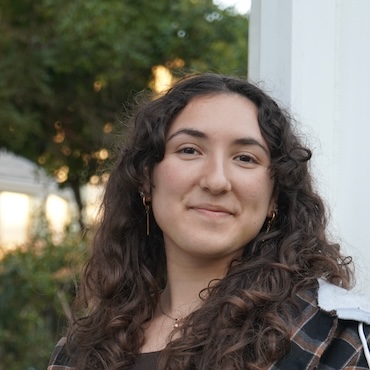
Sierra Ferrante
A Model that works: Sharing the Isla Vista Trading Post Method
Through my ELI project, I wanted to address sustainable fashion and the circular economy. At UC Santa Barbara, we already have a lot of amazing groups doing work on our campus, such as Isla Vista Trading Post, which recirculates clothing in the Isla Vista community – for free! And yet, this model seems rare. My project created a web video series to spread the why and the how-to of this amazing organization to other places. I interviewed members of the group as well as professional experts, and created a YouTube series that addresses the environmental and community aspects of Isla Vista Trading Post, as well as how to actually start one.
.jpeg)
Juliette Allayaud

Lula Rosenbach
Barter 4 Better: Building a Collaborative and Environmentally Aware Community in Isla Vista
Inspired by a desire to build community connections and encourage responsibility for caring for one another and our environment, we hosted two barter fairs throughout the quarter, with 65 participants in total. Both skills and physical items were traded with a goal of combating over consumption and waste and to encourage community building in Isla Vista. The aim of these events was not only to show residents how much waste could be avoided if we worked together to share resources, but to exhibit the strength that is possible if we, as active members of this neighborhood, come together to make a change.

Itzel Jimenez
Bloom the Room: Promoting Healthy Homes and Housing Justice in Isla Vista
Bloom the Room was a community-based project that addressed mold-related housing concerns while promoting tenant awareness and environmental health in Isla Vista. Through a series of interactive workshops, residents selected, potted, and decorated plants chosen for their air-purifying and mold-fighting properties. The project also distributed at-home mold testing kits to help participants identify potential mold issues in their living spaces. In partnership with the Isla Vista Tenants Union (IVTU), residents who discovered mold in their homes were connected with resources and advocacy support to address housing violations. The project increased awareness of indoor environmental health and empowered tenants to take action toward safer, healthier living conditions.
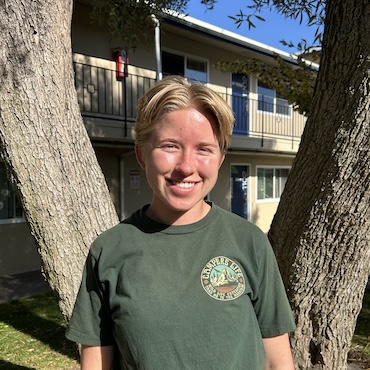
Isa Merideth

Laila Shahida
Build Up The Bins
Our project was focused on increasing composting accessibility to the Isla Vista/UCSB community. Our project efforts included outreach and education to raise awareness about composting and existing collection locations, bucket collection from local restaurants, and donation of repurposed buckets to community members as compost bins at the UCSB Earth Day Festival. Collaborating with UCSB Housing, we also worked to implement a compost drop off site at off-campus housing facilities, though a new location ultimately was not approved at the desired location. However, we will continue to advocate for this project in the future with help from the Department of Public Worms (DPW). Our work on Build Up the Bins taught us valuable leadership skills and brought us closer to a closed food-loop system in the UCSB community.

Cacee Tran
Creative Use for All
Creative Use for All (CUfA) was born out of a need to provide greater longevity and life to unused arts and crafts materials. I was able to establish a physical cabinet at the UCEN (next to the campus store) full of donated excess arts and crafts supplies that the UCSB community no longer needed that others could use for different projects. Throughout the entirety of the Winter Quarter, I began collecting these materials at donation sites in and around UCSB and Isla Vista. At the same time, extending into the Spring Quarter, I began reaching out to different UCSB and Isla Vista organizations to secure a physical space for Creative Use to be located. I was able to participate in multiple different events such as Youtopia, Earth Month, and the Environmental Affairs Board’s Earth Day! CUfA has increased accessibility towards arts and crafts supplies as well as promoted sustainability and diverted usable materials from landfills.

Cassie Ryan
Diving Deeper: Marine Education Through Tidepooling
For my ELI project, I aimed to promote marine conservation and inspire ocean stewardship among UCSB students and the broader Santa Barbara community. To achieve this, I created a species identification field guide for local intertidal organisms, featuring information on natural history, ecological roles, and conservation status for each species. I led two interactive tidepooling excursions using the guide, teaching community members about the importance of our coastal ecosystems. Additionally, the guide is available for free, both online and physically, at the UCSB Research Experience and Education Facility (REEF), the Santa Barbara Visitor’s Center, and the Hollister Ranch Conservancy, ensuring the guide will be used for years to come. Ultimately, I hope the guide serves as a lasting educational resource that deepens our community's connection to the ocean.

Kavya Thiagarajan
Endocrine Disrupting Chemicals in Skincare Related to Child and Adolescent Health
The purpose of this project was to raise public awareness surrounding Endocrine Disrupting Chemicals (EDCs) in commercial products, such that consumers can make informed decisions regarding synthetic chemical exposures. EDCs are chemicals that are structurally similar to hormones, and can therefore interfere with biological processes, causing adverse health effects through cumulative exposure over time. In order to raise awareness, an infographic on EDCs and child health was distributed to the nurse department for Goleta School District, and an infographic on EDCs and adolescent health was distributed to UCSB students through a residential workshop and presentation in two lecture halls on campus. Two instagram posts were created, one on EDCs and child health and one on EDCs and Adolescent health. Finally, a research paper was written and is in the process of publication.
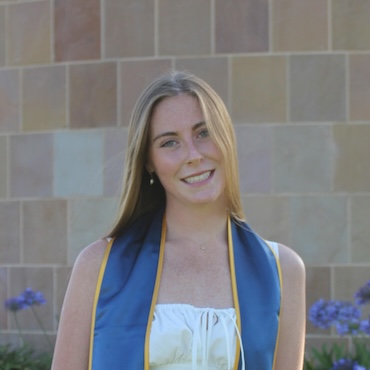
Morgan Downes
Environmental Career Catalog
For my ELI project this year, I created a zine called the Environmental Career Catalog. This project was meant to help students interested in environmentalism spend some time thinking about how their own passions and interests could be applied to a career, without the stress and anxiety that usually comes along with that question. The first section of my zine includes journal prompts that should help provide some clarity, or at least get students thinking about various considerations when it comes to the career path they want to choose. The second section is a series of interviews with environmental professionals so that students can see examples of how they combined their various skills, passions, and interests with a passion for the environment to create their career. Lastly, the zine closes with a letter of advice synthesized from all of the interviewees, leaving readers with a sense of ease but also inspiring them to take steps towards the future they want for themselves.
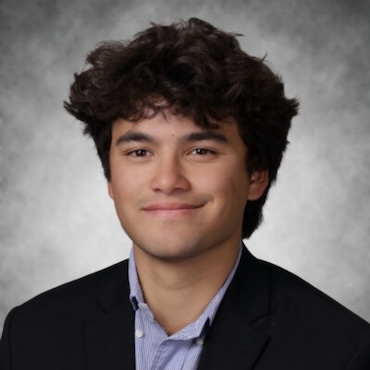
Marcello Chang
Exploring the Environmental Impacts of Data Centers
My ELI project was aimed to improve the sustainability of the North Hall Data Center’s power infrastructure. I analyzed 62 cabinets within the data center and based off of the cabinets power structure I gave recommendations to my mentor, who managed the data center. With the goal of reducing the amount of unnecessary critical power load in the data center, I identified 21 cabinets that the data center is working towards fixing. With 2 cabinets already being retrofitted, we reduced 6 kilowatts off of critical power.

Emily Ballati
Get Outside @UCSB
Get Outside @ UCSB aimed to increase awareness of and access to outdoor student organizations by collaborating with Excursion Club, Snow Club, and Scuba Club to create promotional videos and campus outreach materials. I contacted club leaders, gathered existing media, and produced videos using CapCut, while also designing QR-based flyer stands for distribution across campus. These efforts led to published club content and over 30,000 combined video views, along with ongoing outreach to campus organizations. Moving forward, I hope this work continues to increase student engagement with outdoor communities. Through this project, I learned how to manage a long-term initiative independently and communicate professionally across organizations!

Amber Nguyen
Glean Up Isla Vista
Isla Vista is a neighborhood full of flourishing but underutilized fruit trees. This may be due to busy student life, as well as high tenant turnover rates. Luckily, one small-scale solution to fruit waste is gleaning, the act of collecting leftover fruit from farms, gardens, or markets that would otherwise be wasted. Backyard Bounty is a local program that does just this. While my project initially aimed to register Isla Vista properties to the program, I was unsuccessful in doing so. However, I was able to pivot my project and raise awareness of local resources to combat food waste through brochures, giveaways, and tabling events.

Sami Bailey
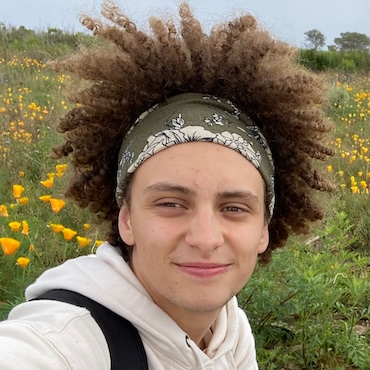
Zander Peterson
Neighborhood Naturalists
Neighborhood Naturalists: Bringing the Classroom Outside was an initiative that allowed fourth-graders the opportunity to become acquainted with the natural environment within a fifteen-minute walking distance of their schools. We took six fourth-grade classrooms in the Goleta Union School District on walking field trips to local parks, where we rotated groups through activities focused on naturalist skills, including observing plants, birds, and the environment around them. We aimed to create a sense of connection to the land and its characters through the accessible and convenient means of a walking field trip during the temperate late-spring school days.
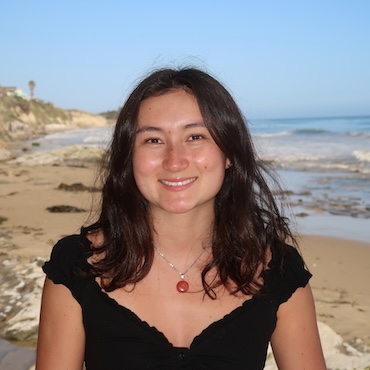
Parker Inglis
RAG2CRAG: A Creative Circular Solution for Climbing Gear Waste
My ELI project was called RAG2CRAG, an art mural made from retired climbing ropes permanently displayed at the UCSB Adventure Climbing Center. Because climbing ropes are made of nylon, their manufacturing emits massive greenhouse gases, leaving no clear sustainable disposal methods. This initiative directly confronted the accessibility barriers within gear disposal through creative repurposing solutions. The ultimate goal was to turn this mural into a proof of concept that inspires climbers to find creative solutions to reduce the amount of ropes entering landfills, making gear upcycling a standard part of climbing culture. Unveiled at a Climbing for Sustainability event, this installation successfully proved that circular economies can break into non-traditional industries. By repurposing 3 climbing ropes, the project directly challenged an industry manufacturing process that generates 11 tons of CO2-equivalent emissions.

Izzy Ribondo
Re-Envisioning Recycling
Re-Envisioning Recycling is an Environmental Leadership Incubator student-led initiative to tackle the collection of soft film plastic from UCSB Campus through collection bins at Ellison Hall, Multicultural Center (MCC), and Bren Hall in addition to collecting from the Amazon Locker located in Isla Vista. The process of collecting this plastic involves sorting through the plastics and weighing them. After this, they are brought to a grassroots organization, Planet Protectors, where they are recycled and compressed using a bailer, and then sent to NexTrex, which uses this plastic material to create durable hardware products, such as plastic decking and benches.

Hunter Maher

Jamie Luu

Milena Seymour
Revamping IV's Native Plant Scene
For our project, we collaborated with IV Recreation and Parks District to reintroduce native plants to various IV parks and sourced our plants from the Cheadle Center which grows plants locally adapted to the Goleta area. We hosted two stewardship events throughout the school year, one at Anisq’Oyo Park and the other at Pelican Park. At our workshops, volunteers learned about the importance of native plants and got to transplant seedlings into the ground. Across our two events, we had over 30 volunteers, planted 9 different species of native plants, and transplanted 78 seedlings.

Tess Weckerly-Healey
Roots of Change - An Environmental Advocacy Podcast
For my ELI project, I created and launched the foundation for Roots of Change, a podcast series dedicated to translating dense legal frameworks and local policy decisions in our community into accessible, engaging concepts that actually resonate with students. I handled the entire setup, from designing our visual identity on Canva and launching our Instagram page to securing professional audio gear for high-quality production. For the case study, I interviewed seven different experts, including UCSB professors, local journalists, and veteran grassroots organizers. I then synthesized these diverse perspectives into a comprehensive narrative script for Episode 1, "The Battle for 'The Goodland.'" This episode centers on Goleta's current urban planning and development conflicts, giving students a clear roadmap on how to use their civic power to drive sustainable change.

Alexis Velasco

Stella Cosgrove
The Culinary Resistance Workshop
The Culinary Resistance Workshop addressed the food paradox at the University of California Santa Barbara where undergraduates face food insecurity despite living in a productive agricultural region while attending a sustainability forward school. We designed a series focused on teaching essential kitchen skills and resource navigation using a collect, create, and consume model. Through partnerships with Apples to Zucchini Cooking School and the Isla Vista YMCA, we equipped students to transform food staples into high quality meals. Our program served over 85 meals and culminated in a community celebration. We secured a grant and authored a guidebook to preserve institutional memory for future leaders that set a framework to achieve a sustainable and food secure status as a participating student.

Ava Albracht

Gibson Lopez de Huehls
The Goleta Green Score
The Goleta Green Score project aimed to increase transparency around the sustainability practices of Goleta businesses to empower consumers and encourage more sustainable operations. Our project aimed to achieve these goals by first surveying students and residents of Isla Vista about how their values regarding sustainability impacted purchases. We then used these insights to develop a ranking system for local businesses that was reflective of consumer values. Finally, we used the ranking system to assess and compare local businesses' practices and published the information. Our results are available on our website. More scores will be added in the future by UCSB Gauchos Go Green.

Sophia Long

Virginia Such
TREAD - Tire Recovery Education and Diversion
TREAD, or Tire Recovery Education and Diversion, is an ongoing recycling initiative that diverts bike tires from landfills. Recognizing the high volume of bike traffic on campus, our ELI project partnered with the Associated Students Bike Shop and Liberty Tire Recycling to establish a sustainable tire-recycling system. Old bike tires were collected, packaged in cardboard wheel boxes, and transported to recycling facilities, where they were processed into crumb rubber and tire-derived fuel.

Angel Martinez
Spatial Analysis of Fishing Vessels in Santa Barbara MPAs: Education, Enforcement, and Vulnerability
I created a spatial analysis of fishing vessels in local marine protected areas (MPAs) in the Santa Barbara region using data from the National Oceanic and Atmospheric Administration (NOAA). The ELI project was designed to support Santa Barbara Channelkeeper, regional offices of the California Department of Fish and Wildlife, and other MPA Watch groups in identifying areas of high vulnerability and risk. The project aimed to create seasonal AIS fishing-vessel maps in ArcGIS Pro to better inform these organizations where they could allocate their resources more effectively and potentially target the human behaviors that have historically affected these protected areas.

Evelyn Tsang

Sanjana Sujeet
Tide and Terra Magazine
To the average Environmental Studies student, it can be overwhelming to go to class after class talking about climate, political, and justice issues and not being able to ‘fix’ things. Environmental anxiety, a state of distress caused by environmental crises and their consequences, is becoming increasingly common. Tide and Terra Magazine is an ongoing project aimed at creating a student-led environmental media platform and community at UCSB, centered on accessible science communication and creative expression for everyone — not just those within the Environmental Studies Department. The project takes the form of a biannual digital and print magazine featuring UCSB student submissions of articles, poetry, photography, art, and other mediums that explore environmental topics. Here is a link to our website that hosts the current and past Issues.